Y’know how sometimes a particular logged-in user isn’t authorized for some option, so you don’t show it to them?
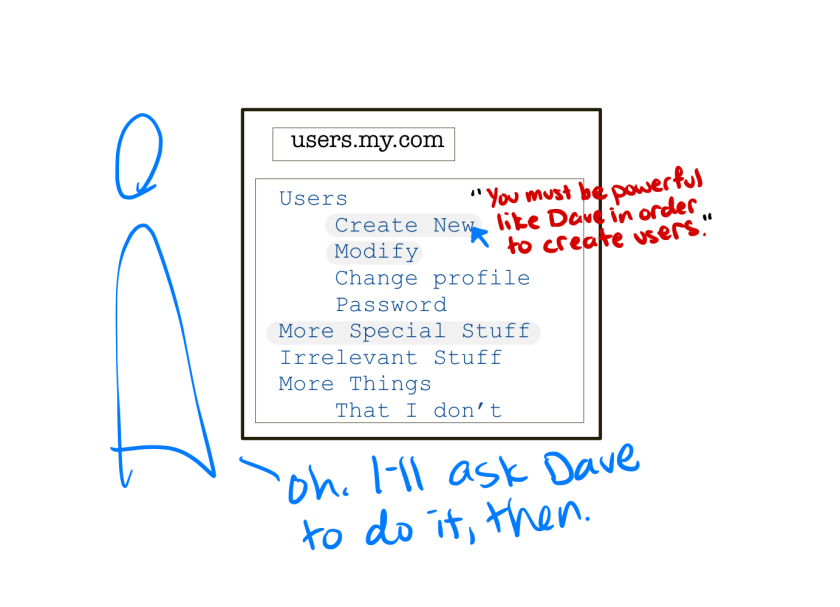
Don’t do that to people. Tell me it’s there, tell me I can’t do it, tell me who can.
This is what happens when you hide it:

Dave and I exist in different worlds, and we don’t know it.
This is even worse with remote work. No longer can I walk over and look at his screen. I have to deduce that this is happening, request a zoom with Dave, and then take turns sharing screens to confirm: it’s not me, it’s the app.
Please, designers and developers, keep us in the same world. I’m not allowed to create new users, but I am allowed to know that the option exists. Please give me the information I need to get this done.
Be specific about context: I’m not talking about super-secret admin options. Or when there’s a conscious decision that the salesperson’s view and the manager’s view are different. This post is about a screen that looks almost the same to two people, and especially in internal apps.
Please don’t put us in different worlds. Tell, don’t hide.